Eskolta Learning Center
Redesigning the information architecture of a professional-development resource hub so that time-constrained educators can find what they need, in minutes, not clicks.
The content was good. Getting to it wasn't.
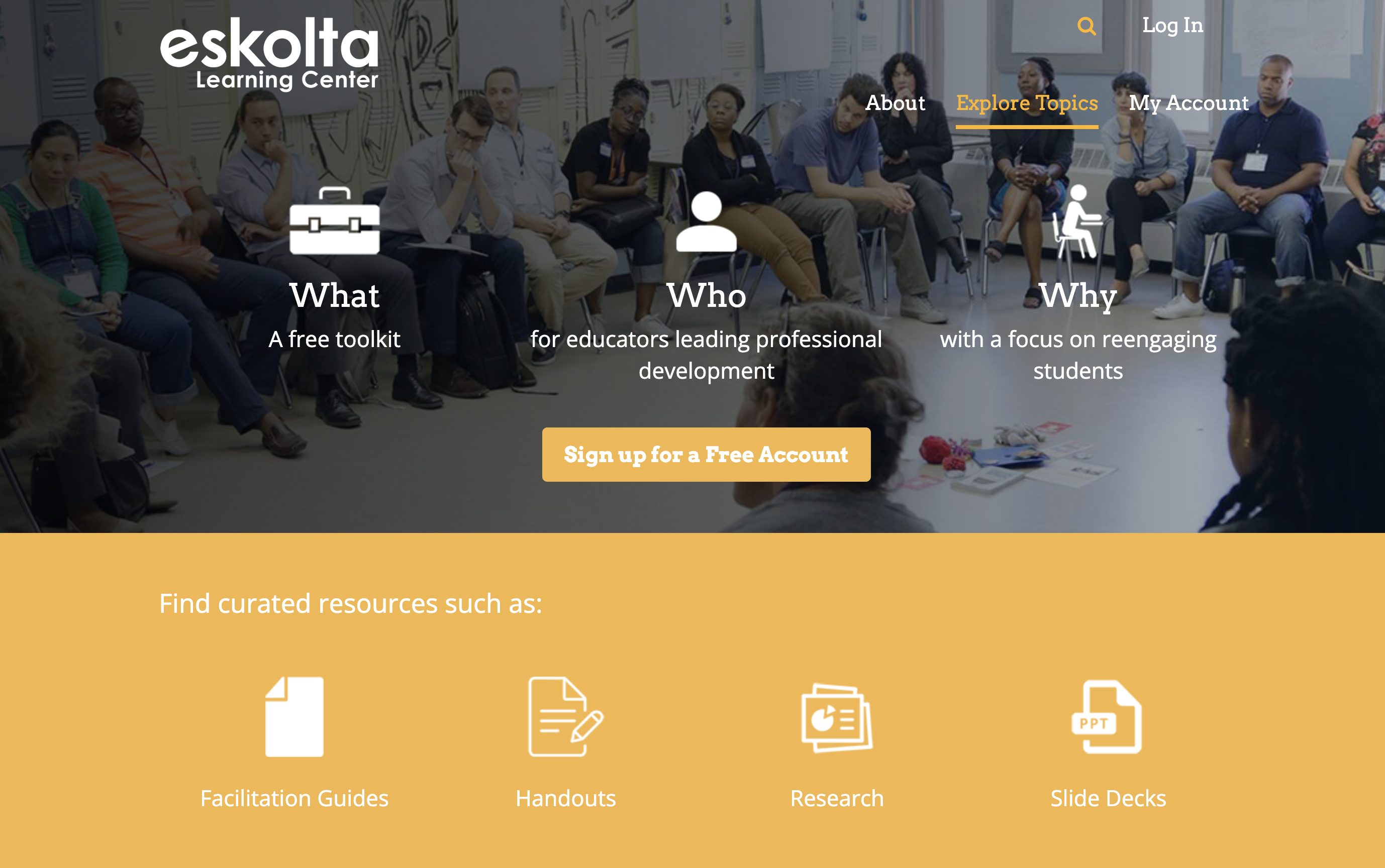
The Eskolta Learning Center is a professional-development resource hub for educators: a curated library of facilitator guides, learning modules, and PD materials built for Eskolta's practitioner community. The content itself was solid. The problem was retrieval.
Educators arriving to prep for a session, often with 20 minutes to spare before it started, couldn't reliably find what they needed. Navigation was inconsistent section to section. Facilitator guides were buried several clicks deep. The architecture had been structured for content organizers, not for the educators who used it under time pressure every week.
The majority of visitors were returning users who already knew what they wanted. The platform was treating all of them like first-time browsers. That mismatch was the core problem.
My role
UX Designer & Front-End Consultant: IA audit, architecture redesign, and front-end implementation.
Timeline
2023 to 2024 · Ongoing with Eskolta
Primary users
- Returning educators retrieving known resources
- Facilitators prepping PD sessions on short timelines
- First-time visitors exploring available materials
Built for organizers. Used by educators in a hurry.
The architecture reflected how Eskolta's content team thought about the material: by program area, by phase, by document type. That logic made sense for production. It didn't match how a facilitator five minutes before a session thought about anything.
The result: high-value resources were consistently hard to find. Returning users, the dominant use case, had no faster path than a first-time visitor. Every session started from scratch.
- Inconsistent navigation across sections: each section used its own organizational logic. No shared structure a returning user could rely on or predict.
- Facilitator guides buried 3 to 4 clicks deep: the most-requested resources required the most navigation to reach.
- Architecture built for discovery, not retrieval: designed as though every visitor was exploring for the first time, when most weren't.
- Visual hierarchy mismatched content priority: what was displayed prominently wasn't what educators needed most urgently.
- High content volume with no efficient path for known-item searches: no way to narrow quickly to resources relevant to a specific session or audience.
Structure first. Style later, or not at all.
Every design decision came back to one question: what does a returning educator need to accomplish in the next five minutes? If a change didn't serve that, it didn't make the cut. The research confirmed what the brief suspected: IA improvements would outperform visual polish for this audience and context.
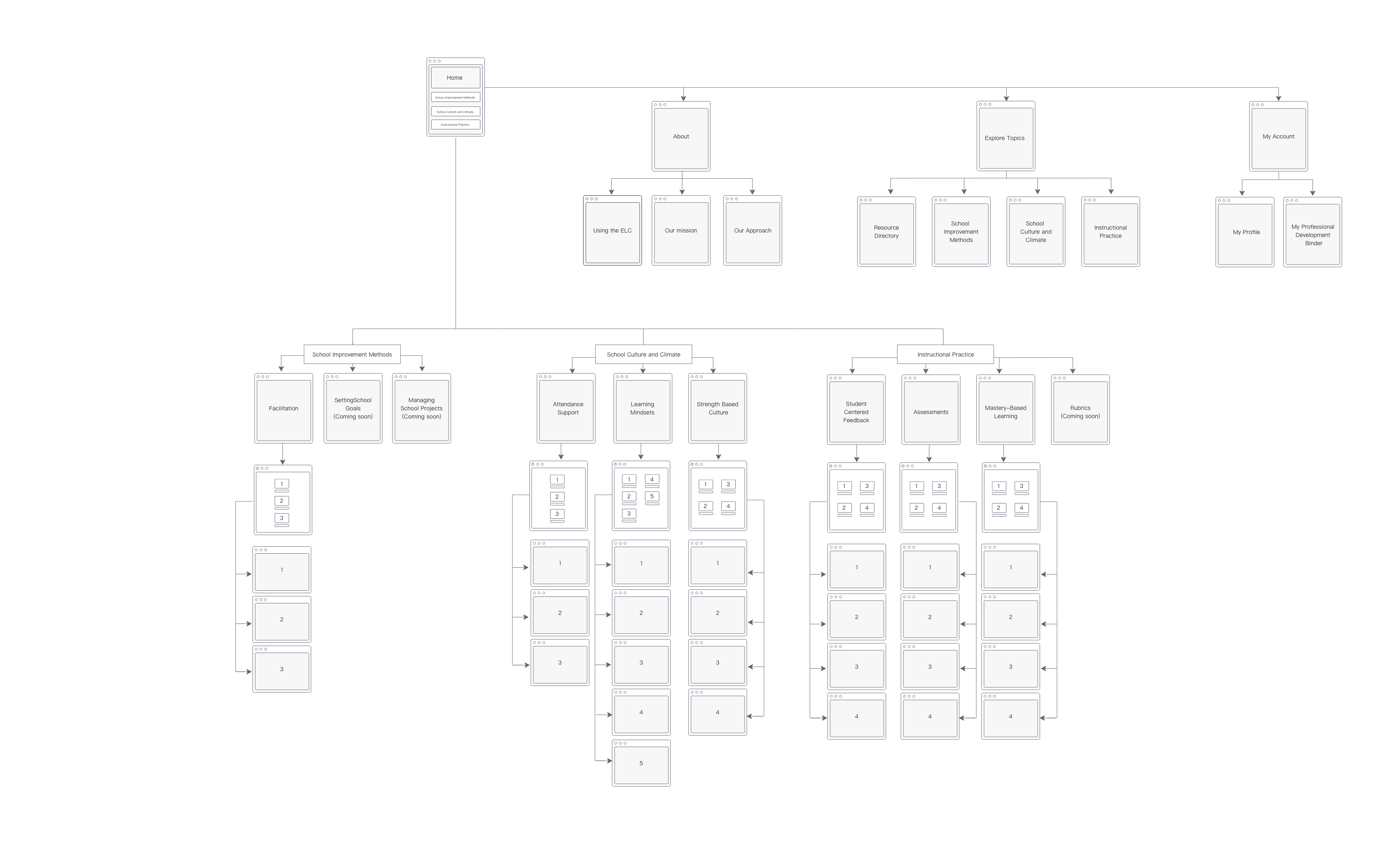
- Rebuilt IA around educator intent, not content categories. The new structure reflects how educators search, by session type, by audience, by stage in the PD cycle, not how the content team organized production assets.
- Surfaced facilitator guides in the first visible layer. The most-retrieved resources moved from 3 to 4 clicks deep to 1. This single change had the largest measurable impact of anything in the project.
- Designed for returning users as the primary case. First-time discovery was treated as the secondary flow. The dominant use case, known-item retrieval, was given the fast path.
- Standardized navigation logic across all sections. Consistent structure means a user who learns one section can predict all others. Each return visit builds fluency rather than adding confusion.
- IA over polish: confirmed by research. Usability work validated the prioritization. Time and budget were spent on structural decisions, not decorative ones. The right call, backed by evidence.
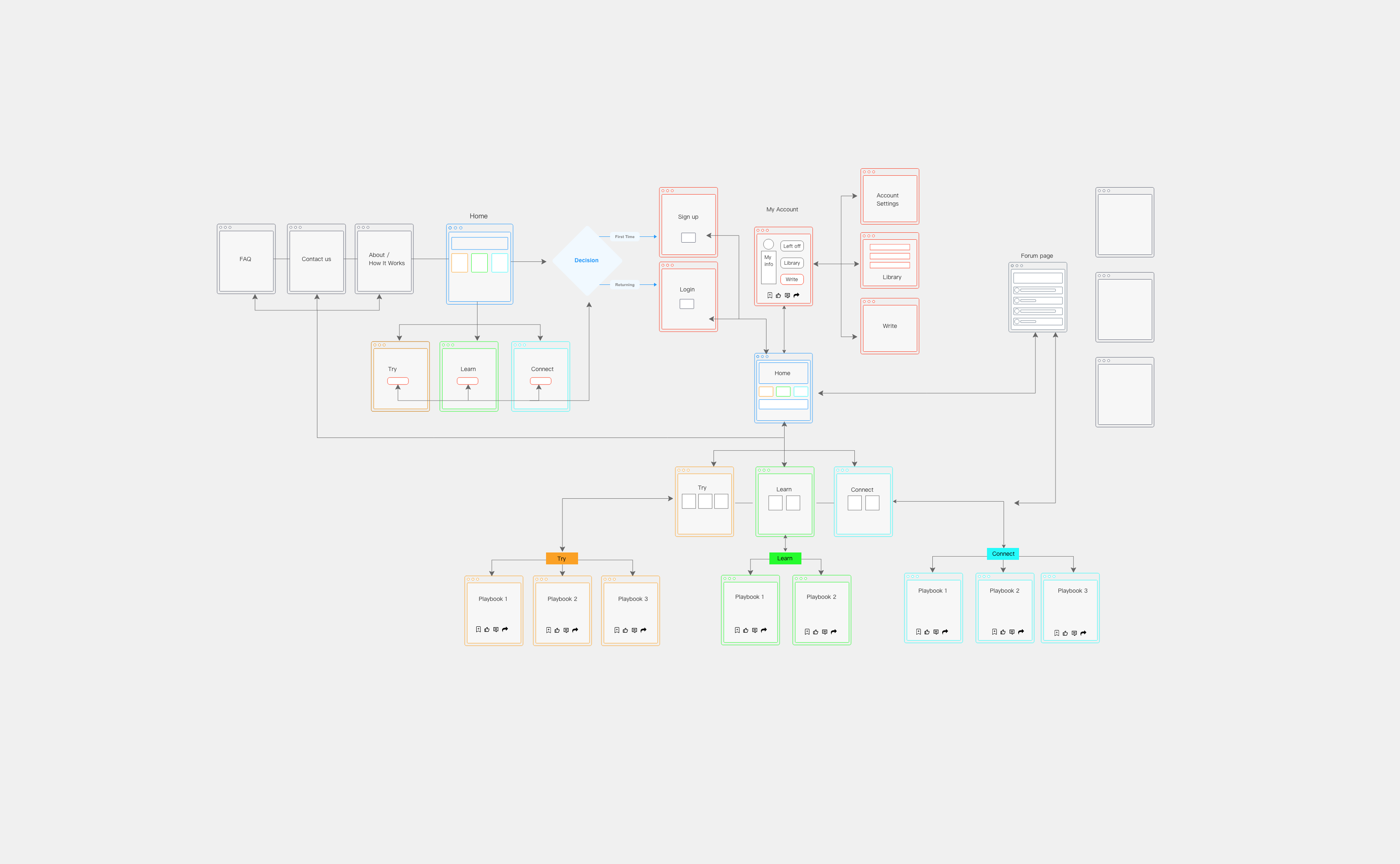
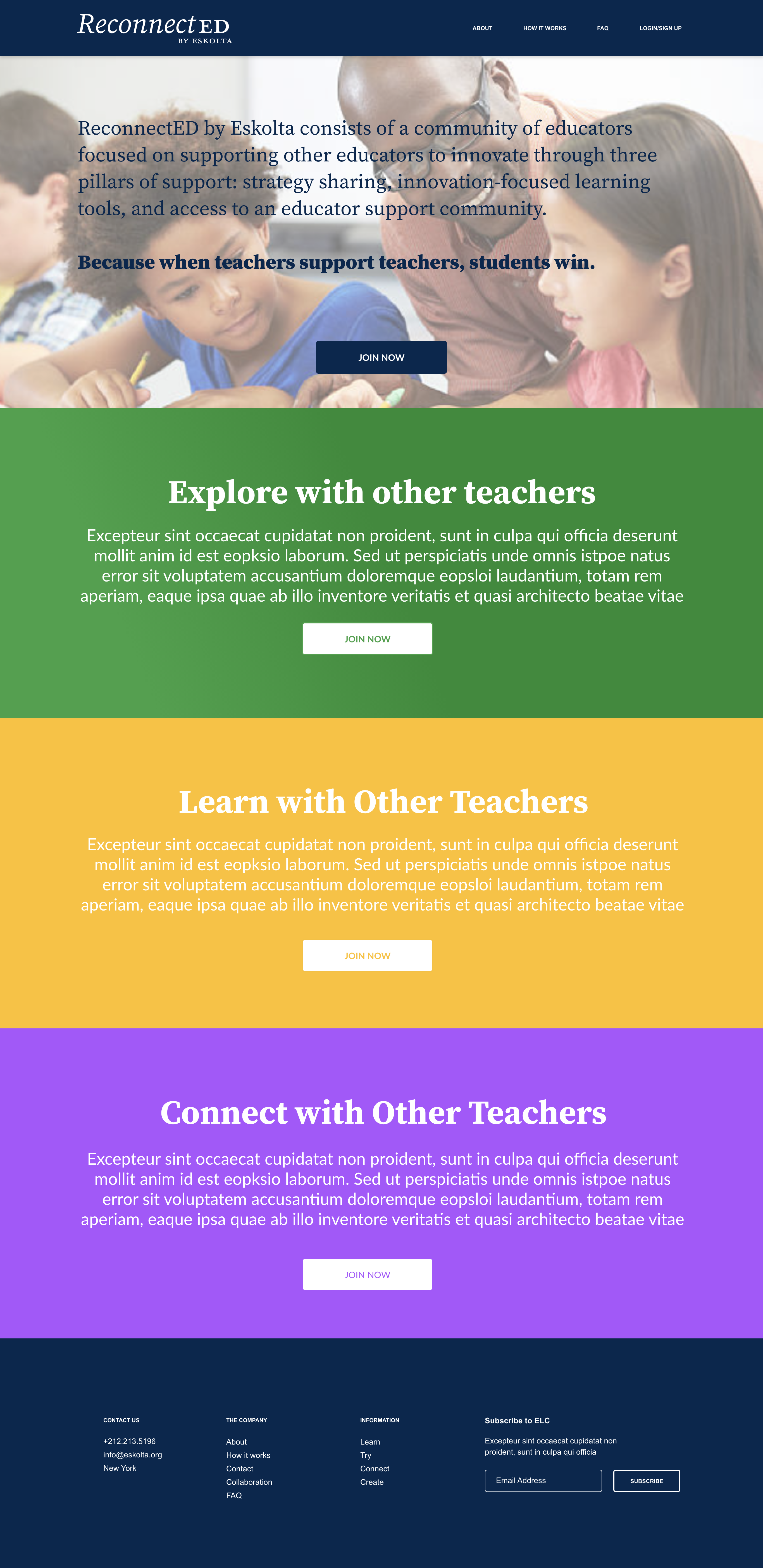
Before & after: the architecture shift
What the work confirmed
The project validated the core hypothesis: for time-constrained users with known retrieval goals, structural clarity outperforms visual refinement. The work produced both immediate improvements and a validated foundation for ELC 2.0.
Most-needed resources moved from 4 clicks to 1: facilitator guides and session tools surfaced to the first visible layer, eliminating the most common retrieval failure.
Navigation logic standardized across all sections: consistent structure means returning users build fluency with every visit, rather than relearning each section from scratch.
IA confirmed to outperform polish for this audience: usability research validated the prioritization decision. Structural investment paid off; decorative investment would not have.
A validated architectural foundation for ELC 2.0: the IA decisions made here became the brief for the full platform rebuild now in development.
What's next
ELC 2.0 is in development
A full platform rebuild is now underway, using the validated IA and structural decisions from this engagement as its foundation. ELC 2.0 rebuilds the platform end-to-end: new component system, new front-end build, designed for long-term maintainability. A new case study will be published when it ships.